
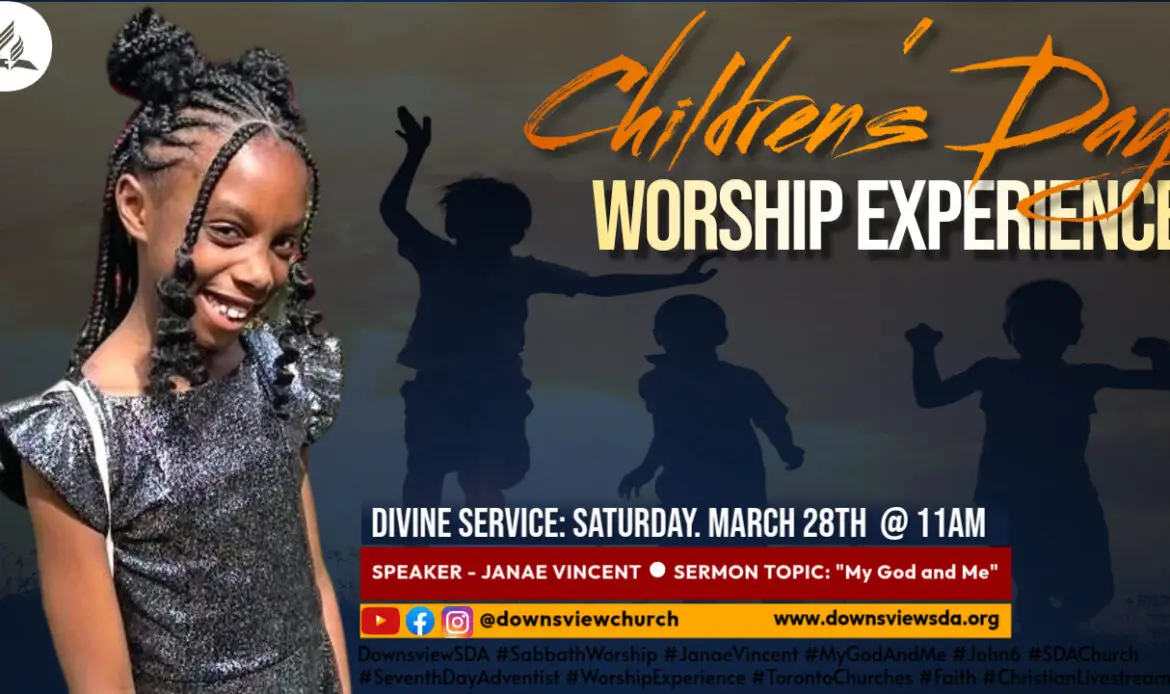
My God and Me
- Sermon By: Janae Vincent
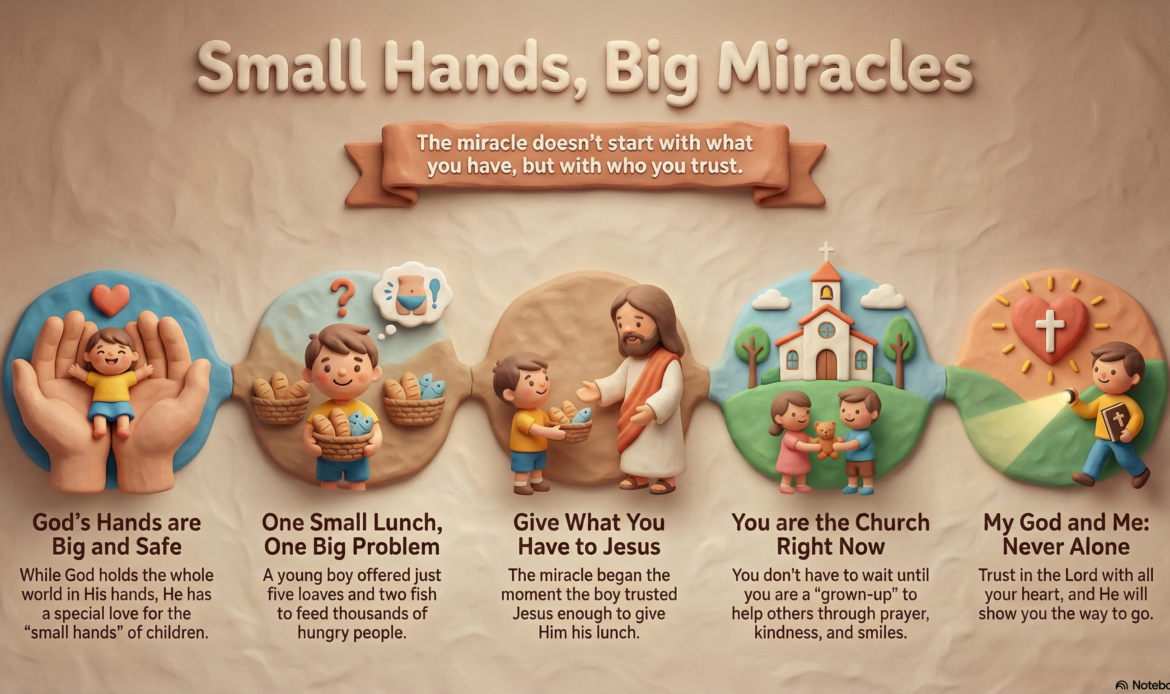
Small Hands, Big Miracles: 5 Surprising Lessons from a 10-Year-Old’s Sermon
1. The “I’m Just a Kid” Feeling
If you were sitting in the pews at Downsview Seventh-day Adventist Church recently for Children’s Emphasis Sabbath, you might have noticed something special about our speaker, 10-year-old Janae Vincent. As her sister Jada pointed out, Janae doesn’t just walk—she skips. That infectious, skipping joy set the tone for a message that tackled a feeling we’ve all had: the “I’m just a kid” (or “I’m just one person”) syndrome.
It’s easy to feel too small to matter when the world’s problems feel like a mountain. But Janae stood at the pulpit to show us that “small hands” are exactly what God uses to kickstart “big miracles.”
2. God’s Hands are Bigger Than Your Dad’s (and the Whole World)
Janae opened her message with a surprise: a photo of her father’s hands displayed on the big screen. To a child, a dad’s hands are the strongest things in the universe—they carry the heavy stuff and make us feel safe. But Janae used that visual hook to point us to an even greater security.
While human hands are strong, they have limits. God’s hands, however, hold the entire world. They are the hands that protect us, provide for us, and—as a profound reminder for the adults—forever bear the marks of the sacrifice made for our redemption. Leading the congregation in a chorus of “He’s Got the Whole World in His Hands,” she reminded us that we are held by the Creator.
“These are the biggest hands I have seen in my life… but do you know whose hands are way bigger than my dad’s? You guessed right—God’s hands.”
3. The Lunchbox Logic: Small Gifts, Massive Impact
We often think that to make a difference, we need “stadium-sized” resources. Janae invited us to close our eyes and imagine a big green hill. Picture the scene from John 6:8-9: thousands of people (10,000 to 15,000—enough to fill a modern stadium!) all hungry. You can almost hear the “grrrr” of their stomachs.
Enter a young boy with a simple lunch packed by his mom. It wasn’t a fancy feast; it was five barley loaves and two small fish. In those days, barley was the “poor man’s bread”—the simplest, humblest food you could find. To the disciples, it looked like a drop in the ocean. But “lunchbox logic” tells us that Jesus doesn’t need a buffet to start a miracle. He just needs someone willing to say, “It’s not much, but it’s Yours.”
4. The Miracle Starts with Trust, Not Multiplication
Janae shared a takeaway that flipped the script on how we usually read the Bible. We usually get excited when the food starts doubling and tripling, but Janae pointed out that the real miracle happened much earlier.
Before a single person was fed, that 10-year-old boy had to be incredibly brave. Imagine him standing up, clutching his small lunch, and walking through a crowd of 15,000 people to reach Jesus. He was nervous, maybe even shy, but he moved anyway.
The miracle didn’t start when the food was multiplied; it started when the boy decided to trust Jesus.
It wasn’t about the bread; it was about the relationship. The boy gave what he had because he believed in the Person he was giving it to.
“The miracle didn’t start when the food was multiplied; it started when the boy trusted Jesus.”
5. The “My God and Me” Shield: You Are Never Alone
During an interactive story about a girl named “Lily,” Janae defined God as an “ever-present help.” For the kids, she explained that “ever-present” means God is always right there, beside us like a shield. For the adults, she anchored this in the “refuge and strength” of the Psalms.
The children practiced a mantra that we should all carry: “My God and Me—We are never alone.” Drawing from Psalm 23:1, Psalm 46:1, and Deuteronomy 31:6, Janae reminded us that this shield of presence follows us everywhere:
- At School: When the work is hard or we feel stuck.
- At Home: Where we rest and grow with family.
- With Friends: In our play and our social lives.
6. You Aren’t the “Future” of the Church—You Are the Church Now
In a touching appeal to the grown-ups, Janae challenged the idea that children are just the “future” leaders. Quoting Ellen G. White’s Reflecting Christ, she reminded us that God has a special love for the “lambs of His flock.”
The quote she shared was beautiful: “The most precious offering the children can give to Jesus is the freshness of their childhood” (page 373). Children don’t need to wait for a degree or a “grown-up” job to be used by God. They are the church now, and they can perform miracles today through:
- A simple, sincere smile.
- Acts of kindness in the hallway.
- Prayers that come straight from the heart.
7. Conclusion: What’s in Your Hands Today?
As the service ended with a responsive reading, the message was clear: Trust, Presence, and Small Beginnings.
Jesus isn’t looking at how tall you are or how much money is in your wallet; He’s looking at the size of your heart. Whether you are ten years old or one hundred, the invitation is the same: What small thing—what “barley loaf”—can you put in His big hands today?
As Janae reminds us: Because when God is close to you, anything is possible.