
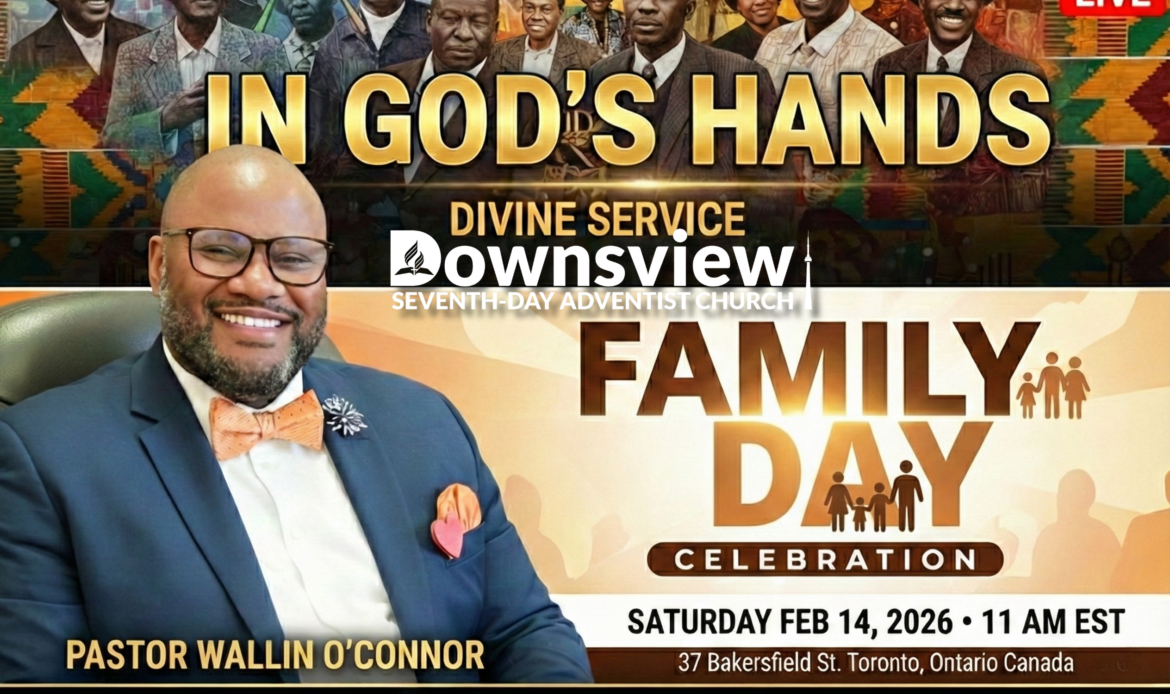
In God’s Hands
- Sermon By: Wallin O'Connor
The Jochebed Strategy: Why Relinquishing Control is the Ultimate Power Move
1. The Relatable Fear of a Divided World
In our current “crisis of nations,” the pressure to protect our families can feel like an impossible weight. We often feel like “Mrs. P”—the single pencil from the Pastor’s object lesson—standing all alone and vulnerable. Under the crushing “pressures of life,” a single pencil snaps instantly. We see this vulnerability even in our daily lives; the Pastor candidly shared his own “road frustration,” where the stress of the world bleeds into the car, witnessed by his children. This isolation is a trap, but the story of Moses’ infancy reveals a “bundle” strategy: a blueprint for unity and radical trust that turns a crisis into a divine mission.
2. The Jurisdictional Shift: God’s “Wild” vs. Man’s “Safety”
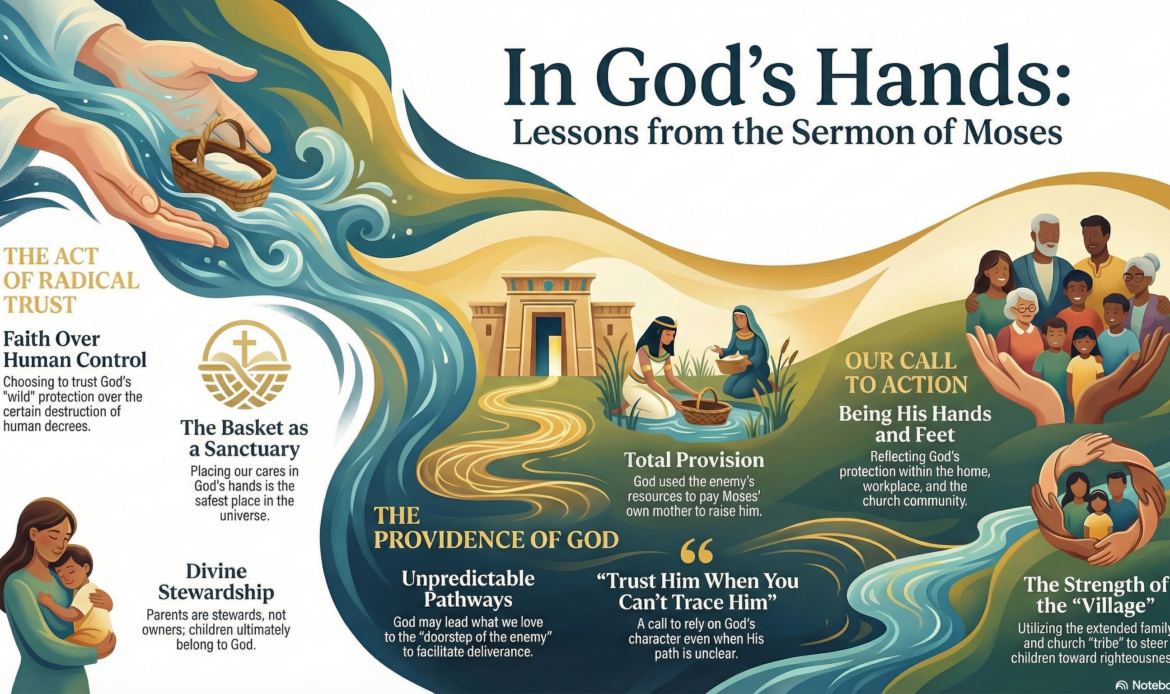
When Jochebed realized she could no longer hide Moses, she executed a counter-intuitive jurisdictional shift. She moved him from the “certainty” of human walls—where Pharaoh’s death decree was absolute—to an ark of bulrushes on the Nile. To the human eye, she was abandoning him to crocodiles and currents. In reality, she was moving him from a jurisdiction of human malice to a jurisdiction of divine providence.
The Strategist’s Takeaway:
- Calculated Risk: True faith isn’t passive; it’s choosing the “wild” of God’s care over the guaranteed destruction of man’s “safety.”
- The Outcome: The world of man sought his eradication; the providence of God sought his development.
“If I leave him up to man, man will kill him. But if I leave him up to God, God will build him.”
3. Strategic Vigilance: The “Silent Watcher” in the Reeds
Unity within a family means that even when a member is “adrift,” they are never truly alone. Miriam, acting as the “Advocate in the Reeds,” practiced a form of strategic vigilance. She didn’t simply walk away; she tracked the basket’s trajectory, maintaining a watchful gaze from a distance.
Miriam’s role teaches us the importance of being “ready to pop out” at the precise moment of opportunity. Her presence bridged the gap between her brother’s vulnerability and his rescue. Family unity isn’t just about physical proximity; it’s about strategic positioning—knowing when to remain a silent watcher and when to speak on behalf of those who cannot speak for themselves.
4. Sovereign Irony: Hiding on the Enemy’s Doorstep
There is a profound irony in how God navigates our paths. Instead of steering the basket toward a hidden Hebrew sanctuary, God guided it directly to “Pharaoh’s driveway.” By allowing the basket to land where Pharaoh’s daughter bathed, God used the enemy’s own circumstances as a shield.
Pharaoh’s daughter, reportedly barren, viewed the child as a “gift from the God of the Nile.” This is the essence of being “blessed in front of your enemies.” God’s pathways are often unrecognizable and cannot be traced by human logic until the outcome is revealed. He can use the very house of the oppressor to shelter the deliverer.
5. Institutional Subsidies: Making the Palace Pay for the Mission
The most extraordinary strategic move was the “economic surety” God provided. In a stroke of divine irony, Pharaoh’s daughter hired Jochebed to nurse and rear her own biological son. The enemy didn’t just stop the killing; the enemy began paying the wages for the mission.
The Strategic Window:
- Cultural Imprinting: Jochebed had a window of 7 to 12 years to instill a “Thus saith the Lord” values system.
- Resilience Building: This time allowed the family to imprint spiritual identity before the “palace culture” could take root.
- The Subsidy: God orchestrated an outcome where the forces seeking to destroy the family ended up funding the deliverer’s upbringing.
6. Reflective Stewardship Over Biological Ownership
We must move from seeing children as biological possessions to seeing them as divine gifts held in stewardship. While we are “biologically blessed,” our children ultimately belong to the King. Our role is to act as stewards, raising them to be “reflectors” of God’s righteousness in every secular sector—from politics to business.
When we raise children with this perspective, they lose the fear of man. Like Moses, they are prepared to “speak with the enemies in the gate” and stand before kings and queens without trembling. They understand that while man may threaten the body, they serve a Sovereign who holds both body and soul.
7. Conclusion: The Power of the “Hearts and Hands”
Navigating a “boisterous” world requires us to embrace the unity of being “Hearts and Hands for Jesus.” Just as Moses’ family worked as a bundle to ensure his survival, we are called to be the “hands and feet” that shield one another from life’s pitfalls. Like the bundle of pencils, we are unbreakable when we are bound together in Christ.
Are you ready to build your own “ark of bulrushes” for the crisis you currently face? Setting your cares adrift in God’s hand is not an act of abandonment; it is an act of placing them in the only grip that cannot be broken. It is, quite literally, the safest place in the entire universe.