
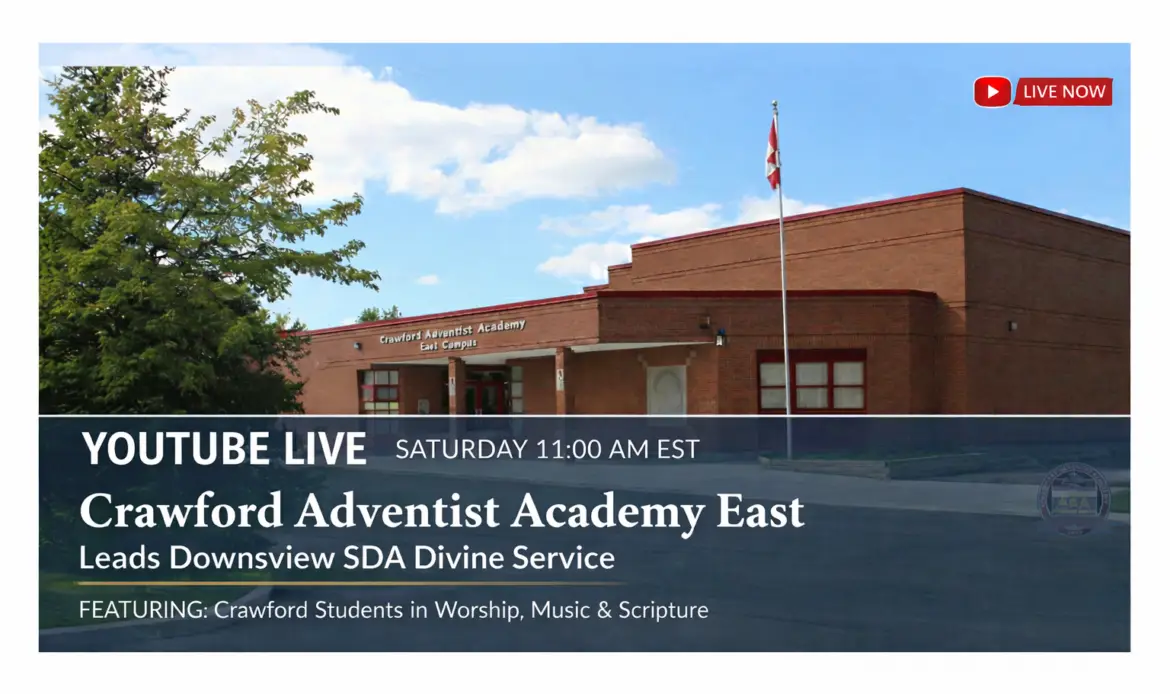
The Excellence Of Grace
- Sermon By: Zion O'Connor
Beyond the Pews: 5 Surprising Lessons on Grace, Excellence, and the ‘Power of Now’
Under the soaring rafters of Downsview Seventh-day Adventist Church, the conventional wisdom of the modern “hustle” was recently dismantled and replaced with a more ancient, sustainable architecture. Outside, the wintry weather bit at the windows, but inside, the air was thick with the warmth of community and the vibrant “black, green, and gold” attire of a congregation celebrating Black History Month.
The occasion—a special service featuring the students of Crawford Adventist Academy East—offered more than just a school presentation. Through the resonant hum of steel pans and the clear voices of children, it provided a profound blueprint for how we might navigate a chaotic world. To be excellent, it turns out, is not about human perfectionism; it is about the intersection of divine grace and the courage to act in the present.
1. Stop Calling Them the “Generation of the Future”
There is a persistent cliché that frames youth as the “leaders of tomorrow.” However, the discourse at Downsview challenged this, asserting that children are not a promise for a distant day—they are the history of right now. This isn’t just a sentimental shift; it is a fundamental realignment of community energy.
Consider the story of Damian Chandler. Long before he was a renowned speaker, he was a student from Toronto attending Apple Creek Church, often feeling like a “nobody” whose gifts were insufficient. He shared a song he’d written, a simple offering that was eventually arranged and recorded. Today, “Lord We Have Come” is sung globally as a staple of Adventist worship. History didn’t happen for Damian “tomorrow”—it happened the moment he stepped into his gift.
When we see students leading through complex musical scores or public discourse, we are witnessing history in the making.
“Everything we do—every song we sing, every word we speak, every place we walk—is history in the making. We are not just making history; we already are history.”
2. The Counter-Intuitive Path to Excellence
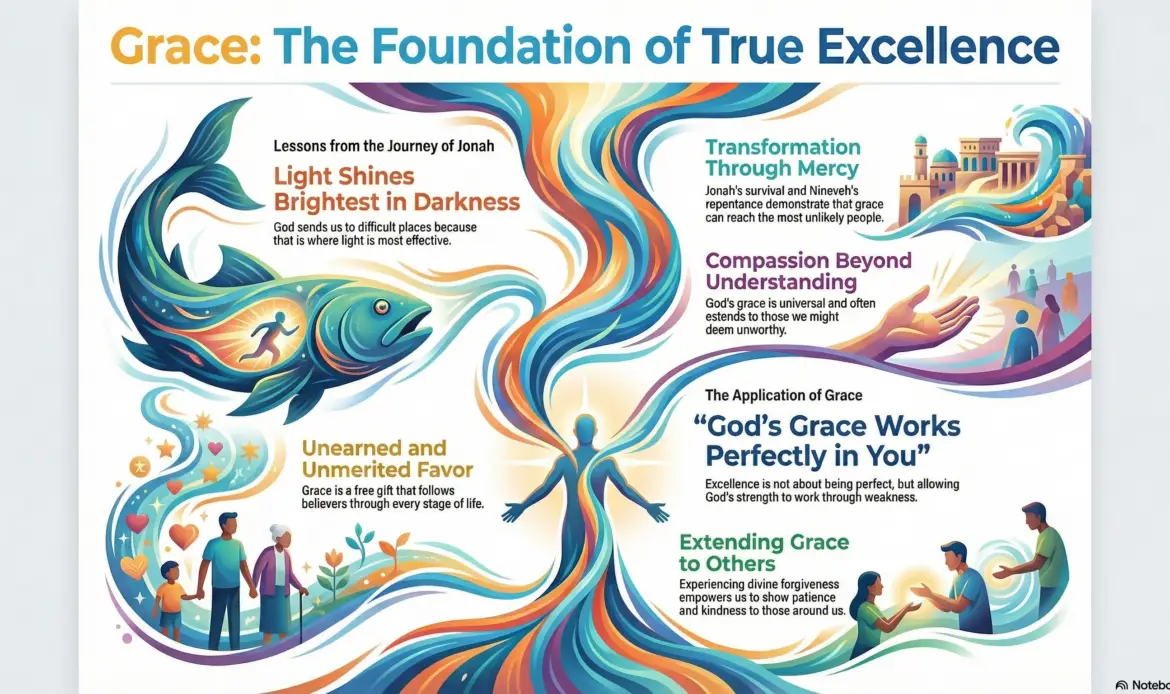
The school’s guiding theme, “God’s Excellence Inspires Faithfulness,” offers a surprising alternative to the exhaustion of modern perfectionism. In a world that demands we “do it all” with flawless execution, the sermon delivered by student speaker Zion Oconor provided a visceral relief: excellence is not the result of human effort, but a byproduct of grace.
This perspective reframes our limitations. Instead of viewing our “weakness” as an obstacle to excellence, we are invited to see it as the very space where divine strength becomes visible. It is a dismantling of the “hustle culture” that suggests we are only as valuable as our last achievement. Faithfulness, therefore, is simply the act of showing up and allowing grace to fill the gaps.
- “You don’t have to be perfect. God’s grace works perfectly in your weakness.”
3. The “Dark Room” Strategy for Impact
A central reflection on the biblical story of Jonah and the city of Nineveh served as a masterclass in purposeful impact. Nineveh was a place of “lawlessness” and “ruthlessness”—a “dark room” that most would choose to avoid. Yet, as the service highlighted, the darker the room, the more effective the light.
This was illustrated through the story of Kendi, a young boy from the Congo taken to a far land as a slave. In a place defined by “terrors” and exhausting labor, Kendi’s gift—his ability to play the conga drum—became his navigation tool for survival. When he played, he found “home” in a hostile environment, and his excellence became a light for others.
The lesson for the modern professional or student is clear: our excellence is often most required in the very environments that feel most uncomfortable. We are not called to shine where it is already bright; we are called to use our gifts as a tool for “home-making” in the dark.
4. The Biological Advantage of Generosity
In a fascinating intersection of faith and science, the service bridged the gap between the pulpit and the laboratory. While generosity is often framed as a moral duty, the speakers pointed toward scientific studies showing that the act of giving actually improves blood pressure and overall cardiovascular health.
This reveals that “God’s way” is not just a spiritual mandate but a biological survival mechanism. By weaving together the instructions of Luke 6:38 (giving in “overflowing ways”) and Acts 20:35 (the blessing of giving over receiving), the service suggested that altruism is hardwired into our well-being. Whether it is supporting a local school or spreading a message “across the airwaves,” the act of reaching out literally heals the giver.
Altruism, it seems, is the ultimate “life hack” for a healthier, more connected existence.
5. Breaking “Solitudes” Through Adversity
The Black History Month tribute to the Right Honourable Michaëlle Jean added an intellectual depth to the theme of resilience. Her journey from fleeing a dictatorship in Haiti to becoming the Governor General of Canada was framed not just as a personal success, but as a mission to “break down solitudes.”
Jean’s mandate, which focused heavily on youth and Indigenous affairs, serves as a reminder that our history—no matter how painful—is the forge in which our leadership is shaped. Her story of overcoming violence and oppression was anchored in a powerful spiritual promise that served as the “spine” of her resilience.
“When you pass through the waters, I will be with you; and when you walk through the fire, you shall not be burned, and the flame shall not scorch you.” — Isaiah 43:1-3
A Legacy in the Making
As Principal Judy Bergen Hall reminded the congregation, the investment in excellence—whether paying the “15th of the month” tuition bill or showing up for 6:30 a.m. practices—is not just an academic endeavor. It is an investment that reaps “eternal dividends.”
Every act of service, every prayer, and every note played on a steel pan is a thread in the historical record of a life. As you move into your week, face the urgency of the present moment with this question:
If every word you speak today is being written into history, what kind of history are you choosing to make?