Walk With Me
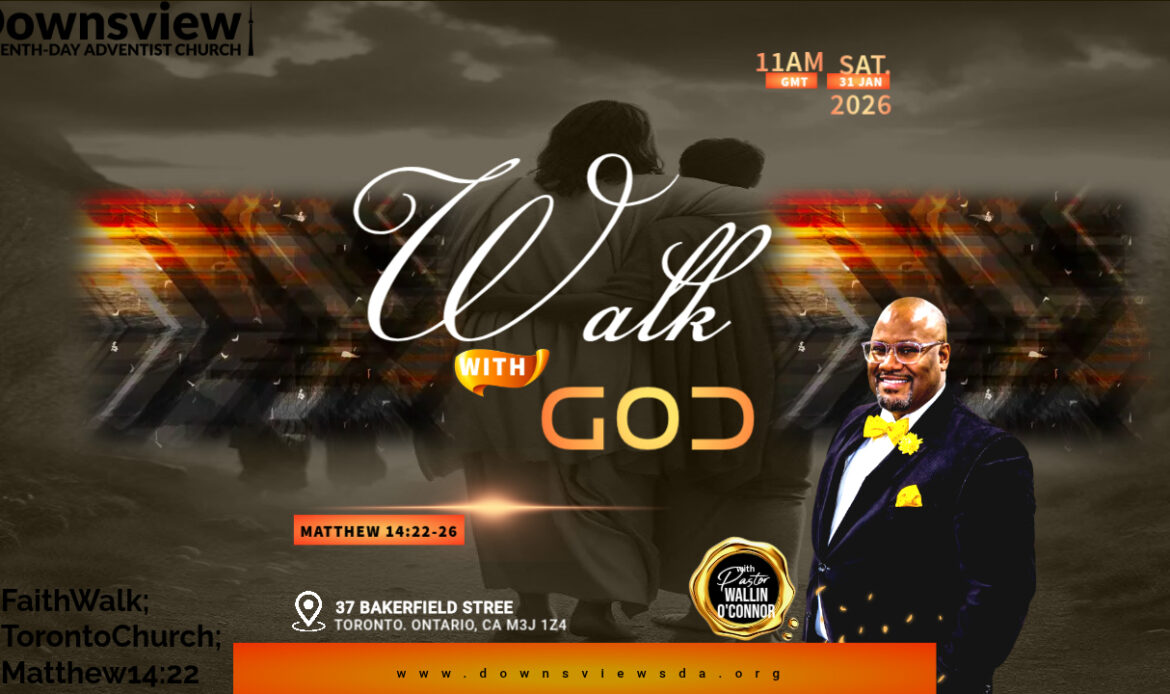
- Sermon By: Wallin O'Connor
The Fourth Watch: Finding Peace When the Storm Is at Its Peak
1. Finding Calm in the Chaos
We have all stood on the shoreline of a life we no longer recognize, watching as the horizon darkens with a speed that defies logic. Perhaps it arrives as a stack of bills that mocks your bank balance, a sobering diagnosis that shifts your entire future, or the hollow, crushing weight of grief. In these moments, the “storm” is no longer a metaphor; it is a physical and spiritual exhaustion that threatens to pull us under. In his profound message, “Walk With Me,” Pastor Wallin O’Connor revisits the iconic narrative of Jesus and His disciples on the Sea of Galilee. By looking closer at this ancient tempest, we discover that the most terrifying moments of our lives—our personal “fourth watches”—are actually the moments where the Divine is most ready to bridge the gap.
2. The Power of the Private “Prayer Closet”
Before the miracle on the water, there was a moment of deep, human sorrow. Jesus was navigating a personal storm: the violent execution of his cousin, John the Baptist. While the crowds clamored for His attention and the disciples looked for leadership, Jesus recognized a fundamental truth about spiritual resilience. Collective worship and the strength of the church family are vital, but they cannot replace “going one-on-one with the Great One.”
There is a depth of healing that is only accessible in the “prayer closet.” The insight here is profound: God needs to hear your specific voice on your own behalf. While others can intercede for you, certain pains require a direct petition to the Father. As Pastor O’Connor emphasized:
“Earth has no sorrow that heaven cannot heal… there are certain pains that can’t get taken away unless you go to God yourself. God needs to hear your voice on your behalf for your issues.”
3. Survival in the “Fourth Watch”
The text specifies that Jesus approached the boat during the “fourth watch” of the night. This is a crucial distinction. While the Jews divided the night into three watches, the Romans used four, placing this moment between 3:00 a.m. and 6:00 a.m. This is the hour of peak vulnerability—the window where the body is most depleted and the mind is most susceptible to the “ghosts” of fear.
To illustrate the danger of this window, O’Connor shares a personal story of a grueling 36-hour drive from Toronto to Alberta. His sister, knowing the stubbornness of her brother, wept as he left, fearing the fatigue of the road. To stay awake, he would engage the cruise control and literally stick his head out of the sunroof, letting the biting wind shock his senses. We often try to navigate our life’s storms with that same desperate, “head-out-the-sunroof” exhaustion. We are toiling, rowing against contrary winds, and it is in this state of total depletion that we often mistake our Savior for a threat.
4. The “I AM” Identity vs. The “Duppy” of Fear
When the disciples saw a figure walking across the whitecaps in the pre-dawn gloom, they didn’t see a Savior; they saw a “duppy.” This cultural term for a ghost or restless spirit perfectly captures the disciples’ mindset: they expected a haunting, not a helping hand. Their fear was a byproduct of their cultural expectations and physical burnout.
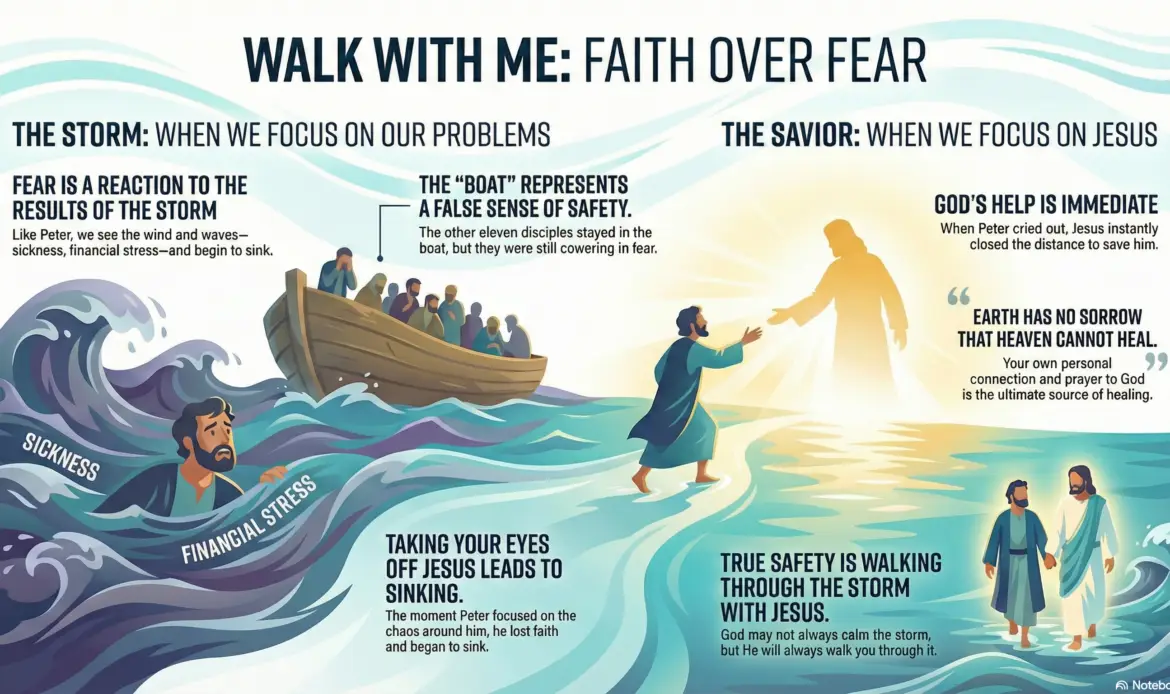
However, Jesus did not offer a mere greeting. He issued a sovereign command that fundamentally altered their reality. When He said, “It is I,” the Greek conveys the “I AM”—the same name God gave to Moses at the burning bush. This was not a suggestion of His presence, but an imperative declaration of His identity as the Sustainer. By saying “I AM,” Jesus was telling them, “I will be what I will be in this moment for you.” When you recognize the “I AM” in the middle of your debt or your diagnosis, your perspective shifts from fearing the “ghost” of your past to trusting the One who holds the elements in His hands.
5. The Science of “Immediately”: Closing the Gap
There is a hidden “science” in the timing of grace that the author of Matthew captures in a single, recurring word: immediately. In our physical world, distance and time are non-negotiable. If you are sinking in the middle of a lake, it takes a human savior time to reach you. But God is not confined to our three-dimensional limitations.
This reveals a fundamental truth: the moment we call out, the gap is closed. You do not need an academically perfect or eloquent prayer to get God’s attention. He is not looking for the “O Thou who sits among the cherubim”; He is looking for a sincere heart.
“When you’re dying and going down into the grave, sometimes all you’ve time for is to say, ‘Jesus!’ and he’s on his way.”
6. Don’t Look at the Wind (You Can’t See It Anyway)
The narrative takes its most famous turn when Peter steps out of the boat. He is successful as long as his gaze is fixed, but he begins to sink the moment he “sees the wind.” There is a sharp, counter-intuitive lesson here: You cannot actually see the wind. You can only see the results of the wind—the tossing waves, the spray, and the whitecaps.
In our modern storms, we often sink because we focus on the byproducts of the enemy’s work. We obsess over the “howling” of critics, the “whitecaps” of mounting debt, or the symptoms of a physical ailment. To survive, we must put on spiritual “blinders.” We sink not because the storm is too large, but because we have prioritized the results of the chaos over the reality of the Solution.
7. The Boat Trap: Choosing Dangerous Safety
Perhaps the most challenging takeaway is the contrast between the eleven who stayed and the one who stepped. The boat felt like the safest place to be during a gale, but the sermon suggests the boat was actually a trap of stagnant safety.
True safety is never found in a sturdy structure or a comfortable routine; it is found in proximity to Christ. It is actually safer to be on the raging water with Jesus than to be in a “stable” boat without Him. Many of us are currently cowering in “boats” of unfulfilling jobs, familiar sins, or comfortable fears, missing the miracle because we are afraid to leave the environment of our own control.
8. Conclusion: A Forward-Looking Perspective
Finding peace in the “fourth watch” requires a radical shift from analyzing the height of the waves to recognizing the “I AM” who stands upon them. As we move forward, the call is to “live so you can invite.” Our lives should be a testimony of courage that draws others toward the shore.
The contrast is sharp: it makes no sense to tell people to come to Jesus if you are cowering in fear or “living as a terrorist” in character within the church. We must live so that our transformation is the invitation.
In your current storm, are you focused on the waves you can see, or the “I AM” standing right in the middle of them?