
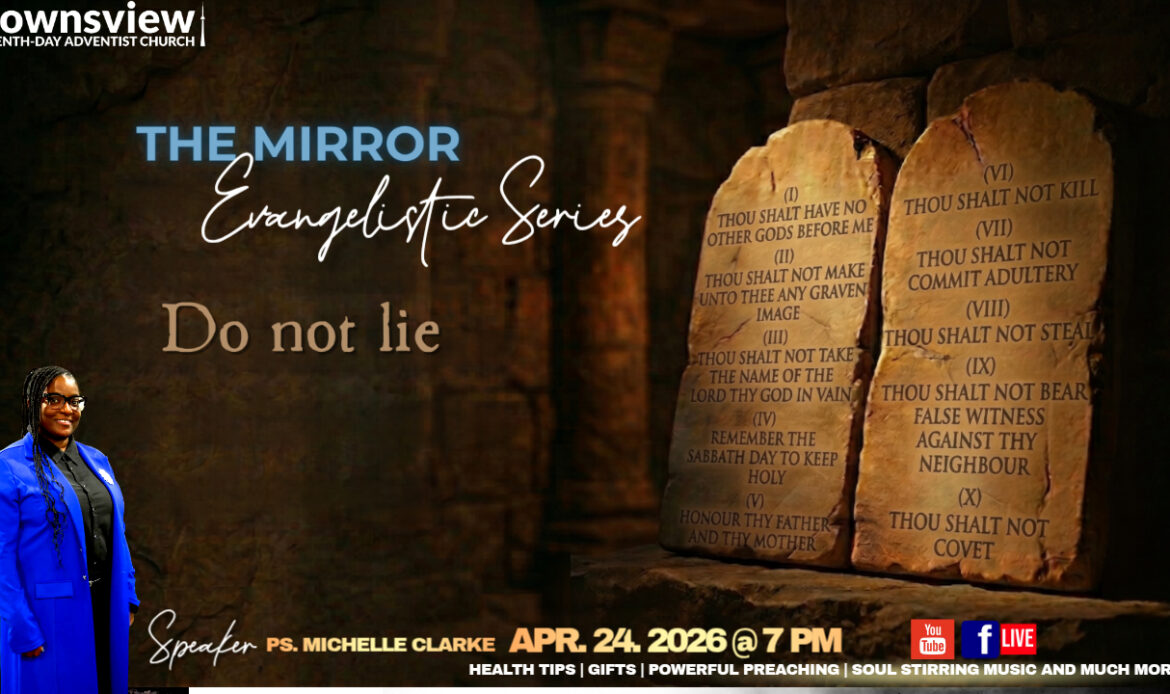
Day #9-The Mirror | “Do not Lie” | Speaker: Ps. Michelle Clarke
- Sermon By: Michelle Clarke
- Categories: The Mirror
More Than a Lie: 5 Surprising Truths About the Anatomy of Gossip and Integrity
Introduction: The Integrity Crisis
We are living through an unprecedented crisis of truth and justice where integrity has become a casualty of convenience. From high-level “scandals and cover-ups” to the tribalism of our local neighborhoods, the virtues of honor and humanity seem to be disappearing in real-time. It is a cultural climate where secular leaders are sometimes blasphemously equated with Christ, while their actions prioritize greed and power over the simple weight of honesty.
In this age of the “Liar-in-Chief” and political perjury, the Ninth Commandment—”Thou shalt not bear false witness”—demands a deeper look. Is this ancient law merely a prohibition against a common fib, or is it a blueprint for protecting the very soul of a community? As we peel back the layers of this directive, we find a profound anatomy of speech that determines whether we build temples of truth or fires of destruction.
1. The “Mirror Effect” of Ancient Justice
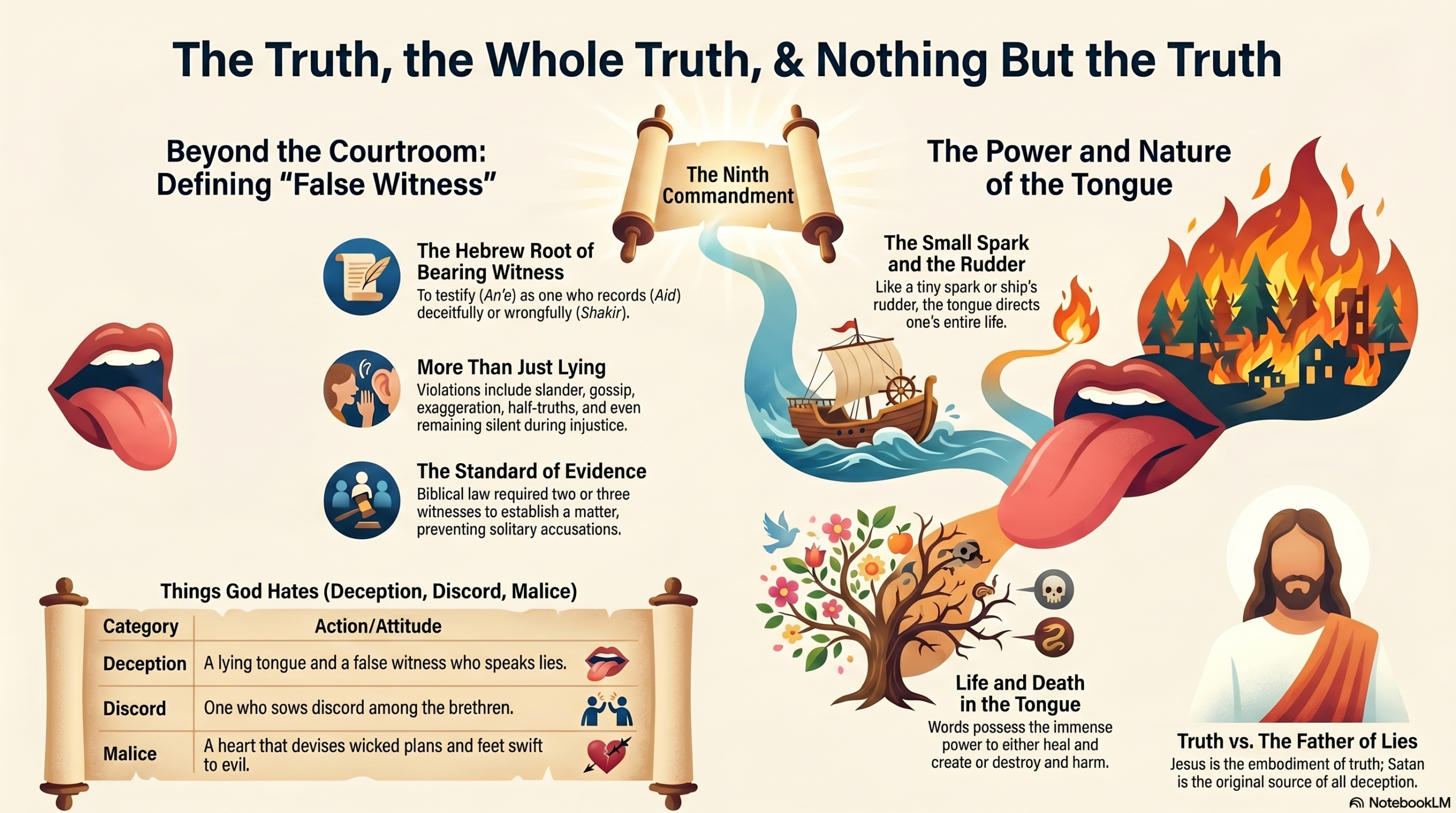
To understand the Ninth Commandment, we must look at the Hebrew “anatomy” of speech found in the Israelite judicial system. The commandment utilizes three specific terms: An’e, meaning to testify or shout; Aid, referring to the witness or record-taker; and Shakir, which denotes deceitful or wrongful intent. In a world without DNA evidence or video surveillance, a person’s life rested entirely on the spoken testimony of two or three witnesses.
Because the stakes were high, the legal standard in Deuteronomy established a startling “mirror effect” to prevent character murder. If a witness was found to be a liar, the judges would impose the exact punishment the liar intended for the accused. This ensured that the weight of the lie would eventually crush the liar, purging evil from the community through a standard of perfect judicial symmetry.
“Whatever the witness… was trying to accomplish to that person, that poor innocent person, it will be on you. The punishment will be on you.”
2. The Ultimate Irony: Truth on Trial
The most chilling violation of this commandment occurred during the trial of Jesus, where the Sanhedrin weaponized the law to destroy the Lawgiver. These religious authorities felt their influence and authority slipping away, so they “hired false witnesses” to secure a death sentence. It is the ultimate irony of history: the most “religious” figures of the day used calculated deception to execute the Man who declared Himself “The Way, the Truth, and the Life.”
To remove the threat of Jesus’s influence, the leaders leveled a barrage of false charges designed to justify His execution:
- Blasphemy: Misrepresenting His identity as the Son of God.
- Sabbath-breaking: Rebranding His acts of mercy as violations of holy time.
- Demon Possession: Claiming His miracles were fueled by the power of Satan.
- Subversion: Accusing Him of plotting to overthrow Roman authority.
- Temple Threats: Distorting His prophecy about His own death and resurrection.
- Gluttony and Drunkenness: Slandering His compassion for the marginalized and disenfranchised.
3. Challenging the “Sticks and Stones” Myth
Modern society often clings to the nursery rhyme that words cannot cause real harm, but the Ninth Commandment suggests otherwise. While a broken bone eventually knits back together, the damage caused by a stinging rumor can persist for a lifetime. Slander is a form of character murder that destroys a person’s reputation, livelihood, and mental health based on mere assumptions or perceptions.
Assumptions about a person’s character or orientation can become a “walking fire” that follows them to their grave. When we spread reports that we have not verified, we are participating in a spiritual assault that the Bible equates with violence. The impressions left by malicious speech are far more permanent than physical scars, often shaping a person’s reality in devastating ways.
“I would rather sticks and stones break me, because words have lasting, lasting impressions… That could go with you until your dying breath.”
4. The Silence that Speaks Volumes
We often break the Ninth Commandment through what we don’t say, a sin of omission that results in “Heavenly Contempt of Court.” If we sit silently in the company of gossip or refuse to defend the innocent when their character is being marred, we are complicit in the lie. Refusing to testify to the truth when you have knowledge of it is a violation of your duty to your neighbor and your Creator.
Consider the weight of entertaining a “walking, breathing news station”—that person in your life who constantly broadcasts rumors. There is a specific pain in listening to a rumor and then passing it along, only to see it destroy a long-standing friendship. When we participate in the news cycle of gossip, we create a chasm of coldness that even an apology may never fully bridge.
5. Whose Brand are You Wearing?
Our speech serves as a spiritual “brand” that reveals our true allegiance: Jesus as the Logos (Word of Truth) or Satan as the “Father of Lies.” In the Great Controversy, Lucifer began his rebellion through a deceptive campaign, slandering God’s law as an “unnecessary restraint” and God Himself as unjust. Every time we engage in tail-bearing, we are echoing the original deceptive campaign that corrupted the universe.
The severity of this issue is highlighted in Proverbs 6, which lists seven things God hates as an abomination—a word meaning deep disgust. Remarkably, three of those seven are violations of the Ninth Commandment: the lying tongue, the false witness, and the one who sows discord. This is why James 3 compares the tongue to a spark of fire or a rudder; it is a small member that directs the entire course of a life toward either heaven or hell.
Conclusion: The Power to Bridle
The Ninth Commandment is ultimately a law of love, calling us to protect the reputations and spirits of those around us. Integrity requires more than just avoiding a blatant lie; it demands that we “consecrate the mouth” and refuse to participate in the destruction of others. To live with honor, we must bring our speech under the influence of the Holy Spirit and learn the vital discipline of bridling our tongues.
As you reflect on the power of your words, consider the spiritual origins of your conversation. Will you continue to wear the brand of the slanderer, or will you represent the God of Truth? From this day forward, will your words be used to build a temple of truth, or to feed a fire of destruction?