
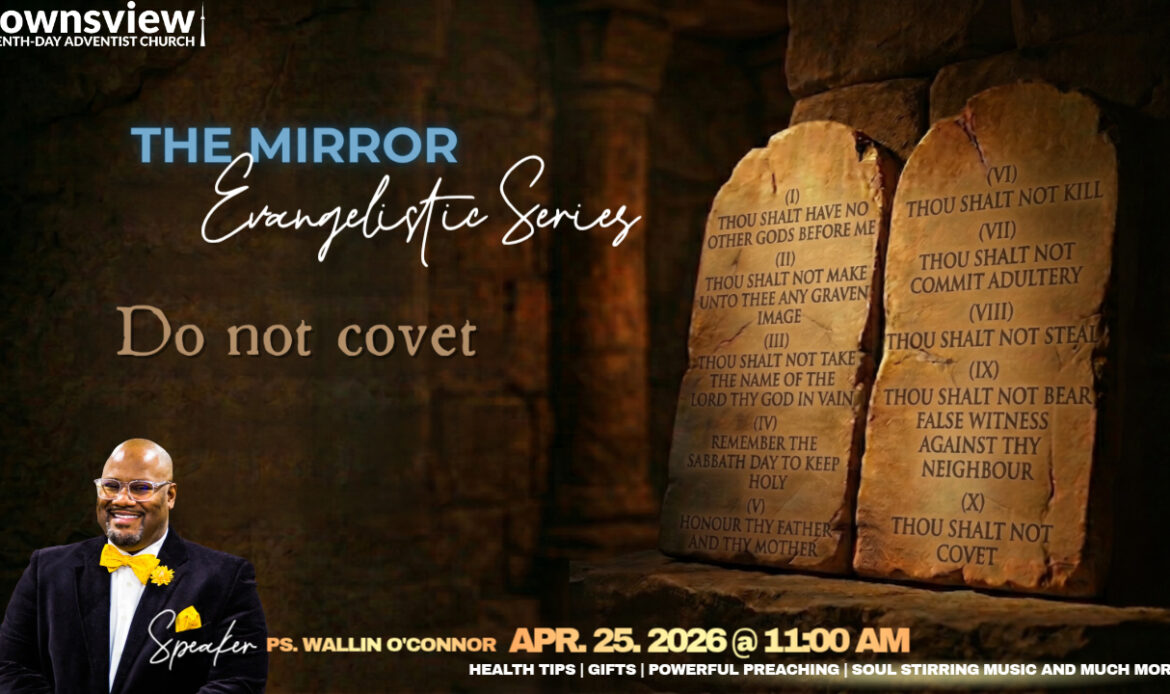
Day #10-The Mirror | “Do not Covet” | Speaker: Ps. Wallin O’Connor
- Sermon By: Wallin O'Connor
- Categories: The Mirror
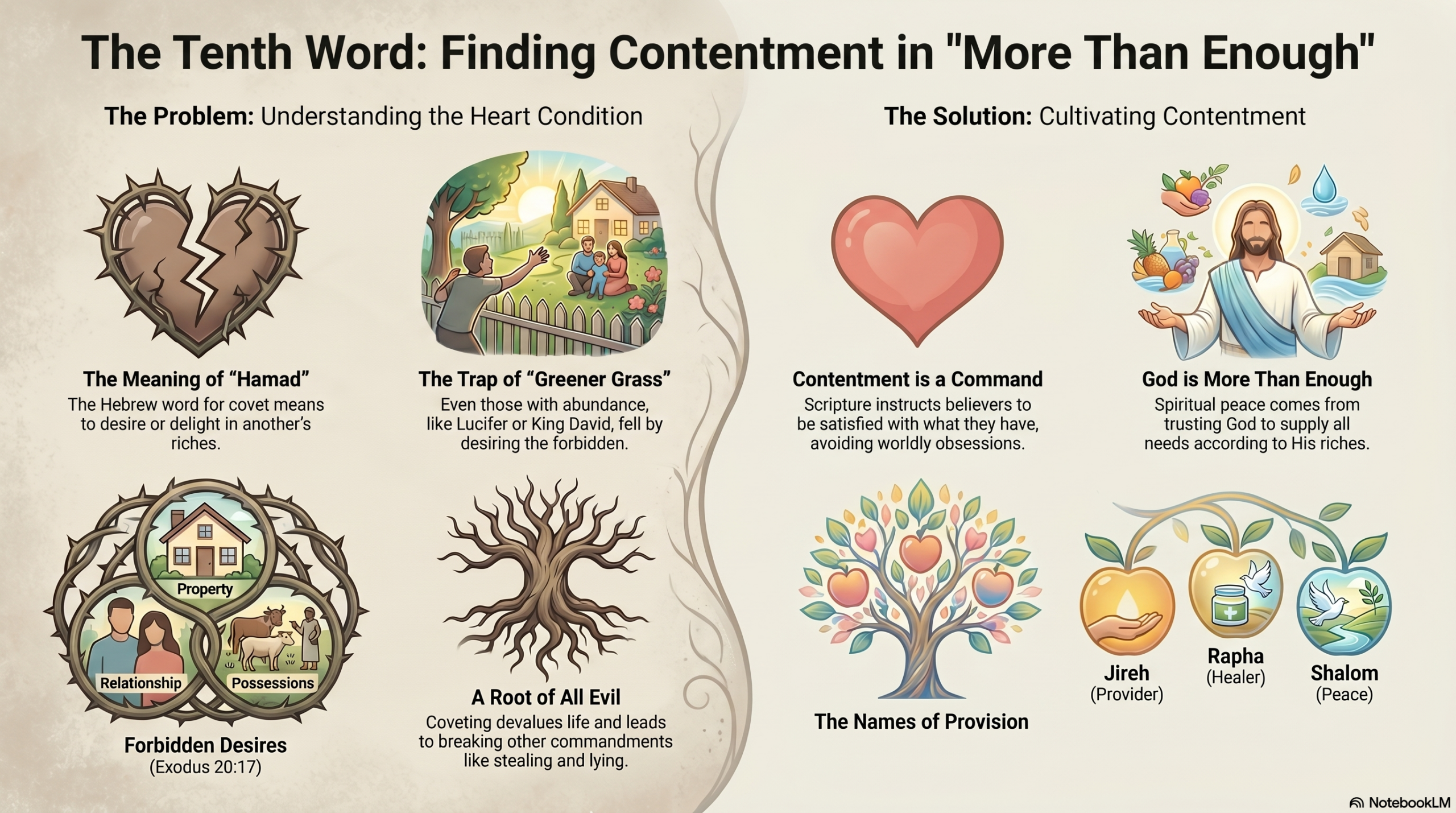
Why “More” is Often Less: 5 Counter-Intuitive Truths About the Art of Contentment
1. The “Never Enough” Syndrome
We live in an age of the infinite scroll, where the highlights of a thousand other lives are served to us before we even finish our morning coffee. It creates a low-grade fever of discontent—a feeling that no matter what we acquire, we are perpetually one purchase or one promotion away from being “whole.”
To understand this restlessness, we must look into “The Mirror.” In spiritual law, the commandments do not exist to change us through outward effort; they function as a mirror to show us who we truly are. While the first nine commandments often deal with visible actions, the 10th—”Thou shalt not covet”—drills directly into the bedrock of the human soul. It suggests that our problem isn’t a lack of resources, but a condition of the heart. Covetousness is the silent engine of our anxiety, reflecting an internal state that refuses to believe what we have is sufficient.
2. The “Greener Grass” Fallacy: The Hidden Cost of Others’ Success
We often gaze over the fence at a neighbor’s flourishing garden, wondering what secret fertilizer they use. We see the “flourishing” and the “bloom,” but we rarely see the toil or the thorns. We covet the result while remaining blissfully ignorant of the price.
- The Illusion of the Perfect Union: We see the “stunning specimen” of a couple and imagine a life of perpetual bliss. Yet, the reality is that many who appear perfect in public are navigating a private “hell” behind closed doors.
- The Luxury Trap: We see the neighbor driving the expensive, gleaming vehicle and feel the sting of envy. We don’t realize the crushing weight of the maintenance.
“The grass is not always greener on the other side… you see somebody driving their nice expensive car, but you don’t know that they got to work nine jobs and give up two lungs and a liver just to pay gas.”
The transcript calls this “unjust desires.” It is wanting something so intensely that it leads to envy or even theft. When we covet, we are essentially asking to inherit someone else’s burden without realizing it might crush us.
3. The Lucifer Logic: Why Perfection Isn’t a Cure for Jealousy
There is a pervasive lie that if we just had “enough,” we would finally be satisfied. Theology provides a chilling counter-argument in the fall of Lucifer. He was the “seal of perfection”—full of wisdom, perfect in beauty, and draped in every precious stone imaginable, from topaz to diamond.
The irony is profound: the being with the most was the one most susceptible to wanting more. Despite walking among “fiery stones” in the literal presence of the Creator, Lucifer harbored a “stony heart” amidst his precious stones. This is the “Lucifer Logic”: perfection does not cure jealousy; it often inflames it.
We see this mirrored in King David. As a king, he could have any “delicacy”—literally and figuratively—at his footstool. He had the wealth of a kingdom, yet his downfall was triggered by the one thing he was not supposed to have. These case studies prove that covetousness is not a resource problem; it is a heart condition that remains insatiable regardless of the abundance of possessions.
4. The Productivity Trap: When “Getting Ahead” Steals Your Rest
In our modern “hustle culture,” we are told that working ourselves to exhaustion is the only path to abundance. However, if your eyes are constantly fixed on “Egyptian gods”—the material possessions of the world—you physically and spiritually cannot rest.
There is a direct, counter-intuitive link between the 10th Commandment (not coveting) and the 4th Commandment (the Sabbath). Covetousness is the primary engine of burnout. When we are obsessed with accumulation, the Sabbath feels like a threat rather than a gift. Jesus modeled a different path by frequently retreating to pray and rest, signaling that life does not consist in the abundance of things.
When we fall into the productivity trap, we lose the ability to enjoy the “Simple Beauties” that require no gas and no salary:
- The restorative intake of fresh air in nature.
- The rhythmic peace of a long walk.
- The presence of family without the distraction of devices.
- The tranquility found at the edge of a beach.
5. The Ripple Effect: How One Secret Sin Breaks Ten Rules
Coveting is often dismissed as a “secret” sin because it happens in the quiet of the mind. Yet, it acts as the root of failures across all other spiritual laws. It is effectively “idolatry” because it looks to the “Egyptian gods” of the world for liberation rather than the Creator.
Consider how one heart-hatch of coveting breaks the entire mirror:
- No Other Gods: Coveting shifts your trust to material things, putting “stuff” before the Creator.
- No Graven Images: It limits your relationship with the True God by obsessing over how others worship their “false gods” of status.
- God’s Name in Vain: It tarnishes “God’s brand” by acting as though His provision is insufficient.
- The Sabbath: It steals your ability to rest, as a covetous heart is perpetually restless.
- Honor Your Parents: It causes a loss of the honor and legacy God has placed on your own life.
- No Murder: It devalues life, leading to “murder in the heart” through bitter resentment.
- No Adultery: It leads to a failure to honor the commitments and blessings you already have.
- No Stealing: The intense desire for what is not yours eventually leads to taking what you haven’t earned.
- No Lying: It breeds untruthfulness and a loss of integrity as you chase what you lack.
- The Root: It is the “Hamad”—the unjust desire that poisons the soul from within.
6. The “More Than Enough” Promise: A Personal Case Study in Timing
True contentment is not found in “vacation moments”—those easy times when we are swinging hands on a beach. It is found in the “trenches.” I recall a morning in the thick of Toronto traffic, frustrated because my journey was being extended. In the middle of a heavy rain, I rolled down my car window, and it refused to go back up.
My instinct was frustration and a frantic clicking of the switch. But my wife took my hand and began to pray. That moment of “trench-faith” shifted the focus from the obstacle to the Provider.
God provides not when we want it, but when the timing is right. This was the same God who answered my prayer for a partner after a failed marriage. I had placed a specific list of qualities in my Bible and prayed over it daily. I didn’t know that she was praying for me with the same fervor. The ultimate antidote to the “never enough” feeling is found in the specific Names of God, each a remedy for a specific covetous desire:
- Jehovah Jireh: The Provider (The answer when we covet our neighbor’s wealth).
- Jehovah Rapha: The Healer (The answer when we covet another’s health).
- Jehovah Nissi: Our Victory (The answer when we feel defeated by others’ success).
- Jehovah Shalom: Our Peace (The answer when we covet a neighbor’s tranquility).
- Jehovah Rohe: The Shepherd (The answer when we feel lost and aimless).
- Jehovah Shamma: The Present One (The answer when we feel abandoned by the world).
7. Conclusion: From Scarcity to Sufficiency
The core takeaway of a contented life is the realization that the Creator is “more than enough.” Sufficiency is not a bank balance; it is a promise. Whether your cupboards are empty, your gas tank is on fumes, or your health is failing, the spiritual truth remains: your “bread and water shall be sure.”
When we stop looking at what others have and start looking at the magnitude of our Provider, our perspective shifts. We realize that we aren’t just “getting by”—we are being sustained by the One who owns the cattle on a thousand hills.
Final Thought: What is in your mind today that is so big that God cannot conquer it? If you have Him, you have more than enough.