
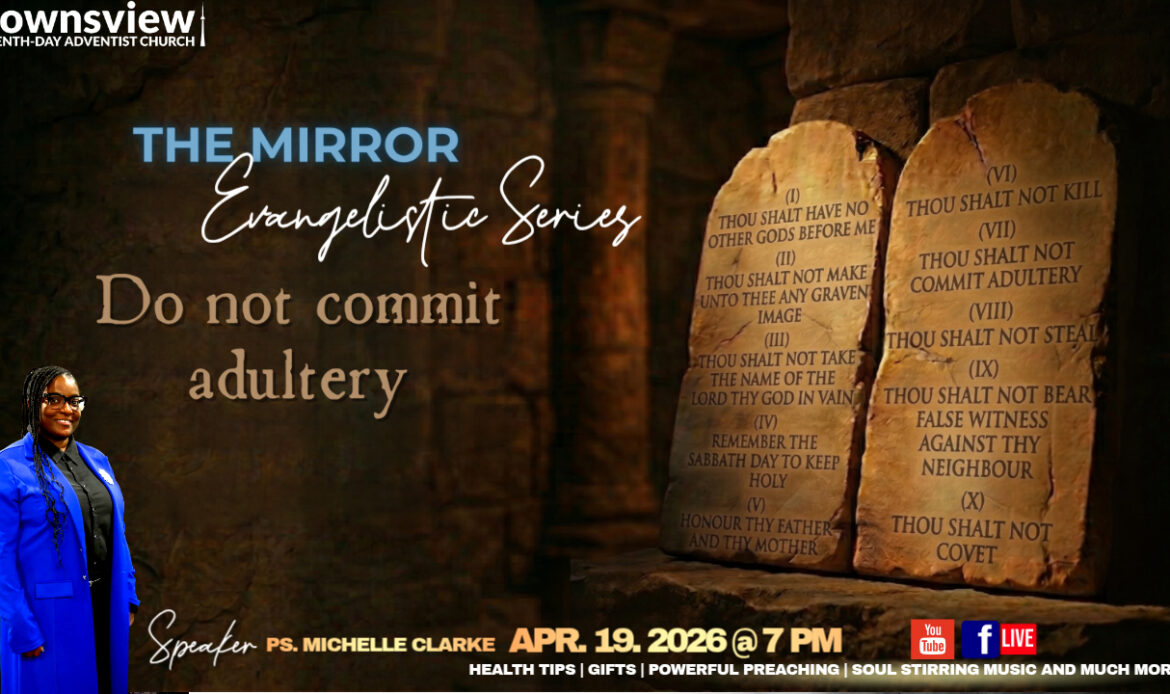
Day #7-The Mirror | “You Shall Not Commit Adultery” | Speaker: Ps. Michelle Clarke
- Sermon By: Michelle Clarke
- Categories: The Mirror
Beyond the Physical: 5 Surprising Takeaways from “The Mirror” on Love, Health, and the Heart
Reflections in the Mirror
The Mirror series challenges us to view divine commandments not as ancient, restrictive chains, but as vital diagnostic tools for holistic alignment. Just as a physical mirror reveals a blemish that requires attention, these spiritual principles serve as a reflection of our current state versus our potential for consecration. In our modern pursuit of wellness, we often bifurcate the health of the body from the health of the soul, yet true restoration requires a unified approach. How do we navigate the complexities of contemporary relationships while maintaining the “temple” of our physical selves? These five takeaways offer a path toward a life of intentionality and spiritual vitality.
The Surprising Power of the “Miracle Bean”
Holistic wellness begins with the understanding that our bodies respond to the intersection of natural remedies and persistent discipline. The castor bean, a botanical treasure originally from Africa, produces an oil whose benefits extend far beyond surface-level application. While widely celebrated for strengthening hair and moistening skin, the speaker reveals a specific, traditional secret: mixing castor oil with olive oil serves as a natural treatment to darken graying hair and beards.
The most profound health claims, however, involve “castor oil packs”—cotton cloths soaked in warmed oil, applied to the body, and secured with wrap. These are not merely for muscle aches; the series describes their potency in loosening and breaking up fleshy outgrowths, including benign and cancerous tumors, often causing them to “burst open and drain” over time. This process is rarely instantaneous. The speaker emphasizes that natural healing requires a level of persistence that mirrors spiritual discipline. Just as we must be persistent with natural remedies for the body, we must be equally vigilant with the boundaries of the heart.
“The problem with us is that we don’t have the patience… if you consistently use it… it’s external application, so that usually works a little bit slower, but if you are persistent and continue… it’s very, very good.”
Adultery Starts “Above the Neck”
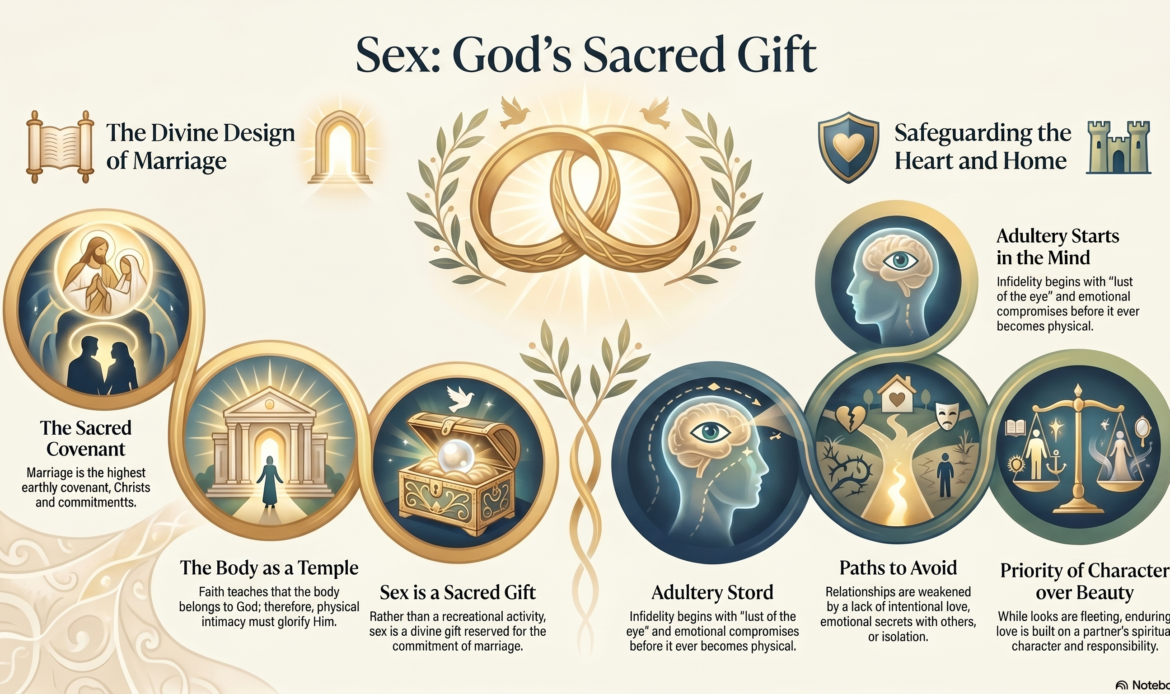
In a culture that often views infidelity as a spontaneous “accident,” Pastor Michelle Clark provides a sharp theological correction: adultery is not a problem in your clothes; it is a problem in your heart. Physical betrayal is merely the final, visible symptom of a long, internal process of mental and emotional drift.
The expert distinction made here is the “look on, look off” principle. While it is objectively possible to observe beauty without sin, the transgression begins when observation turns into a ruminating desire. It is the “looking, and looking, and looking” that transforms an observation into lust. By the time a physical act occurs, the individual has often been “cheating” mentally for months or years.
“Adultery doesn’t just start below the belt. It starts above the neck. It’s not because of a problem in your pants. It’s a problem in your heart. Anyone who has cheated physically has been cheating mentally for months and years.”
The “Individualism” Trap vs. The One Flesh Mandate
Relational decay rarely happens in a vacuum; it is paved by five specific paths of drift: a lack of intentionality, a decline in sexual intimacy, emotional infidelity (confiding innermost secrets to a third party), little compromises like pornography, and—most insidiously—individualism.
Modern “privacy” is often the enemy of a consecrated marriage. When couples operate as separate entities—keeping secrets, separate finances, or making major life decisions without consultation—they create the exact vacuum where temptation grows. This “individualism” violates the “One Flesh” mandate. Biblical transparency requires that “the right hand knows what the left hand is doing.” In the geography of a healthy marriage, there is no room for the “private life” because privacy is where the devil works.
Love is a “Sanctified Will,” Not a “Trap Door”
The series offers a devastating critique of “Hollywood romance,” which portrays love as a “trap door” one accidentally falls into or a “spell” that captures the emotions. This version of love is passive and unstable. In contrast, the biblical principle of Agape is defined as a “decision of a sanctified will.”
This is best illustrated by the imagery of the “Cup” in the Garden of Gethsemane. Jesus’s feelings were dominated by fear and a natural desire to avoid the suffering he was about to face. He prayed for the cup to pass, yet His will remained fixed on His commitment to humanity. Love, therefore, is an active principle you enforce over your feelings. It is an intelligent, wise decision to remain committed even when the emotional “pheromones” fizzle out.
Choosing Character Over “Chemistry”
For those navigating the dating scene, the speaker warns against the shallow “popping balloons” culture that prioritizes looks over longevity. While “good looks turn heads,” they do not sustain a household or manage the crises of life. When seeking a partner for holistic alignment, the series suggests a practical “box-checking” list of criteria:
- Responsibility & Industriousness: Do they have a job? How do they handle money?
- Respect: How do they treat their parents and siblings?
- Health: Are they mindful of their physical and spiritual well-being?
- Consistency: How do they treat you in private versus the image they project in public?
True love is patient and knows how to wait. As the speaker poignantly notes, “Good looks get you excited, but character stays up with the baby.”
“Good looks turns heads, but character takes care of the headache.”
Conclusion: The Restoration of the Temple
The ultimate lesson of The Mirror is that our bodies are not our own; they are temples where we have “turned over the deed” to a higher authority. This means the decisions of what we eat, where we go, and how we use our physical frames are acts of spiritual stewardship.
No matter what “canker worms or swarming locusts” have eaten away at your past—be it broken hearts, bad choices, or physical illness—the promise of the Mirror is one of restoration. God specializes in taking those past failures and placing them in a “sea of forgetfulness,” offering a regenerated spirit and a new life.
If your body is a temple you’ve turned the deed over to, it is time to ask: who is currently making the decisions for how you use it? Today is the invitation to re-take that deed and realign your life with the one who bought you with a price.