

Day #3-The Mirror | “Revere God’s Name” | Speaker: Ps. Michelle Clarke
- Sermon By: Michelle Clarke
- Categories: The Mirror
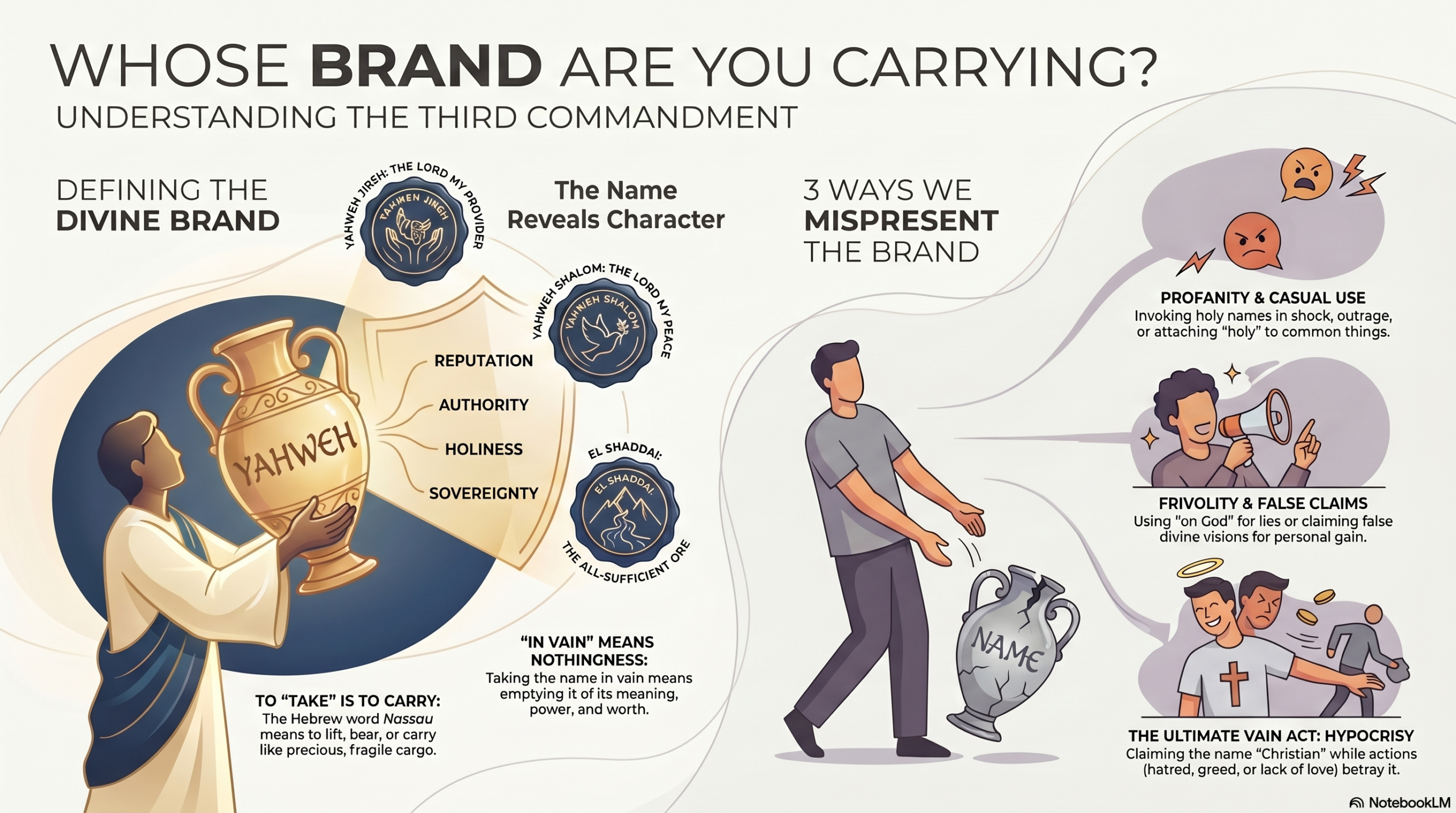
More Than a Word: Why You’re Carrying the World’s Heaviest Brand
In the hyper-saturated marketplace of the twenty-first century, branding is our primary language. We see a “swoosh” and immediately decode the Nike ethos of relentless performance: “Just do it.” We glimpse a minimalist apple and recognize the “Think different” philosophy. As a strategist, I look at these marks and see more than logos; I see promises of identity. Even the soap in your shower has a brand promise—think of the classic Zest slogan: “You’re not fully clean until you’re Zestfully clean.” It’s an appeal to a state of total purity, a brand attribute that resonates deep within the human psyche.
However, branding is not a modern invention. It began as a visceral, often violent, ancient practice. Historically, farmers seared logos into the flesh of livestock to claim ownership. Even more pointedly, the Israelites who fled Egypt likely carried the physical brands of their former masters. To Pharaoh, they weren’t people; they were property. If they fled to the ends of the earth, their skin would still declare that they belonged to the Egyptian empire.
When God gave the Third Commandment, He wasn’t just offering a rule for speech; He was initiating a rebrand. Today, many claim the label “Christian,” which literally translates to “Christ-I-Am”—a declaration of belonging. But we must ask the demanding question: Is your life an authentic representation of that mark, or are you merely carrying the world’s heaviest brand with none of the integrity it requires?
Takeaway #1: It’s Not Just About Cussing—It’s About Cargo
The Third Commandment—”Thou shalt not take the name of the Lord thy God in vain”—is frequently reduced to a prohibition against profanity. While casual swearing is a symptom, the root issue is far heavier. The Hebrew word for “take” is Nassau, which means to lift, to bear, or to carry.
In the transition from the physical brands of Egypt (property) to the spiritual brand of Christ (stewardship), the Israelites moved from being “owned” to “entrusted.” To carry the Name is to transport precious, fragile cargo. It is not like carrying a briefcase; it is like carrying something so valuable that if you drop it, you have to pay for it. This requires a level of care taken to the 10th power.
“It is like precious cargo because it’s holy. It’s righteous… and it’s to be handled with care. If you are shipping an expensive item like a TV or fragile things that can be easily damaged, if you don’t handle it with care, you see the sign: ‘Fragile.’ You can’t kick it about. You can’t throw it on the truck.”
When you claim the brand, you are lifting the reputation of the Creator. If you move through the world recklessly, you aren’t just failing an individual standard; you are damaging the equity of a holy Name.
Takeaway #2: The High Cost of “Deceptive Packaging”
In secular business, the Canadian Competition Act prohibits companies from making false or materially misleading representations to promote their interests. This is a safeguard against “deceptive packaging.” Consider the speaker’s illustration of two cans: one labeled “30% bigger” and the other “40% bigger,” yet both contain the exact same volume. This is a lie designed to promote business interests while the internal substance remains unchanged.
“Taking the name in vain” is the spiritual equivalent of this deception. To be “vain” is to bring something to nothingness, emptiness, or worthlessness. We misrepresent the brand through three specific modes:
- Profanity: The casual invocation of the Name as a filler word during shock or excitement. Whether it’s “Oh my G” or “Holy cow,” it treats the Sovereign of the universe as a linguistic reflex, stripping the Name of its weight.
- Frivolity: This is the “on God” culture of modern youth—using the Name to back up false oaths or promises one has no intention of keeping. It also includes “prosperity gospel” claims, such as the “anointing release” rhetoric where speakers demand “a hundred thousand dollars right now” in the Name of God for personal gain.
- Hypocrisy: The ultimate form of deceptive packaging. This is when a person goes through the religious motions, appearing to have power, while their internal character remains empty. It is a “false advertisement” of the soul.
Takeaway #3: The “I Am” is a Suite of Product Verticals
A successful brand is defined by its ability to solve problems. In theological terms, God’s various names function as product verticals—specific solutions for the “consumer” (the believer). God’s name is the ultimate separator and differentiator. His core identity, Yahweh (“I am who I will be”), translates to: “I am whatever you need me to be.”
This is Covenant Branding. As seen in 2nd Chronicles 7 and Isaiah 43, those called by His name are created for His glory. To represent the brand accurately, you must understand the “verticals” you are advertising:
- Abba: The solution for the fatherless.
- Yahweh Jireh: The solution for the destitute (The Provider).
- Yahweh Shalom: The solution for the anxious (The Peace).
- Yahweh Rohe: The solution for the lost (The Shepherd).
When we carry this brand, we are telling the world that these attributes are real. If we live in constant fear or lack of integrity, we suggest that the brand is a failure.
“He stands on business when it comes to His name… His name is not a light name. It’s a heavy name that we need to carry around.”
Takeaway #4: The Toxicity of “Noisy Gongs”
A brand ambassador can have perfect product knowledge, but if their behavior is toxic, they become a liability. In 1st Corinthians 13, the strategist Paul describes this as a “noisy gong.” You can understand the “mysteries” of the 2,300-day prophecy or have “all knowledge” of Daniel and Revelation, but if you lack love, you are a clanging symbol.
There are specific brand-damaging behaviors that betray the claim of being a Christian. These aren’t just “mistakes”; they are “marketing failures” that empty the Name of its power:
- Backstabbing Brethren: Using the tongue to destroy fellow representatives.
- Anger Management Issues: Outbursts of wrath that contradict the brand’s peace.
- Selfish Ambition and Greed: Operating for personal “market share” rather than the glory of the Name.
- Divisiveness: Creating “dissensions” and “heresies” that confuse the public’s perception of the brand.
If the world sees a “Christian” who is hateful or unforgiving, they conclude the brand has no power to change a life. You have effectively “emptied” the Name.
Conclusion: The Weight of Authenticity
Being a brand ambassador for the Most High is the most significant responsibility any human can assume. It requires moving beyond the label and into authentic representation. Just as Egypt’s brand seared into the skin of a slave marked their identity, the Name we choose to carry marks our lives.
We are walking, living, breathing “brands.” This honor demands reverence because the Name is attached to saving grace, victory, and the power that sets people free.
As you move through your week, audit your “packaging.” Are your daily interactions, your work ethic, and your treatment of others honoring the weight of the brand? Or are you a “noisy gong” offering deceptive packaging to a world that desperately needs the truth? Are you emptying the Name, or are you carrying it with the care that a “10th power” responsibility demands?